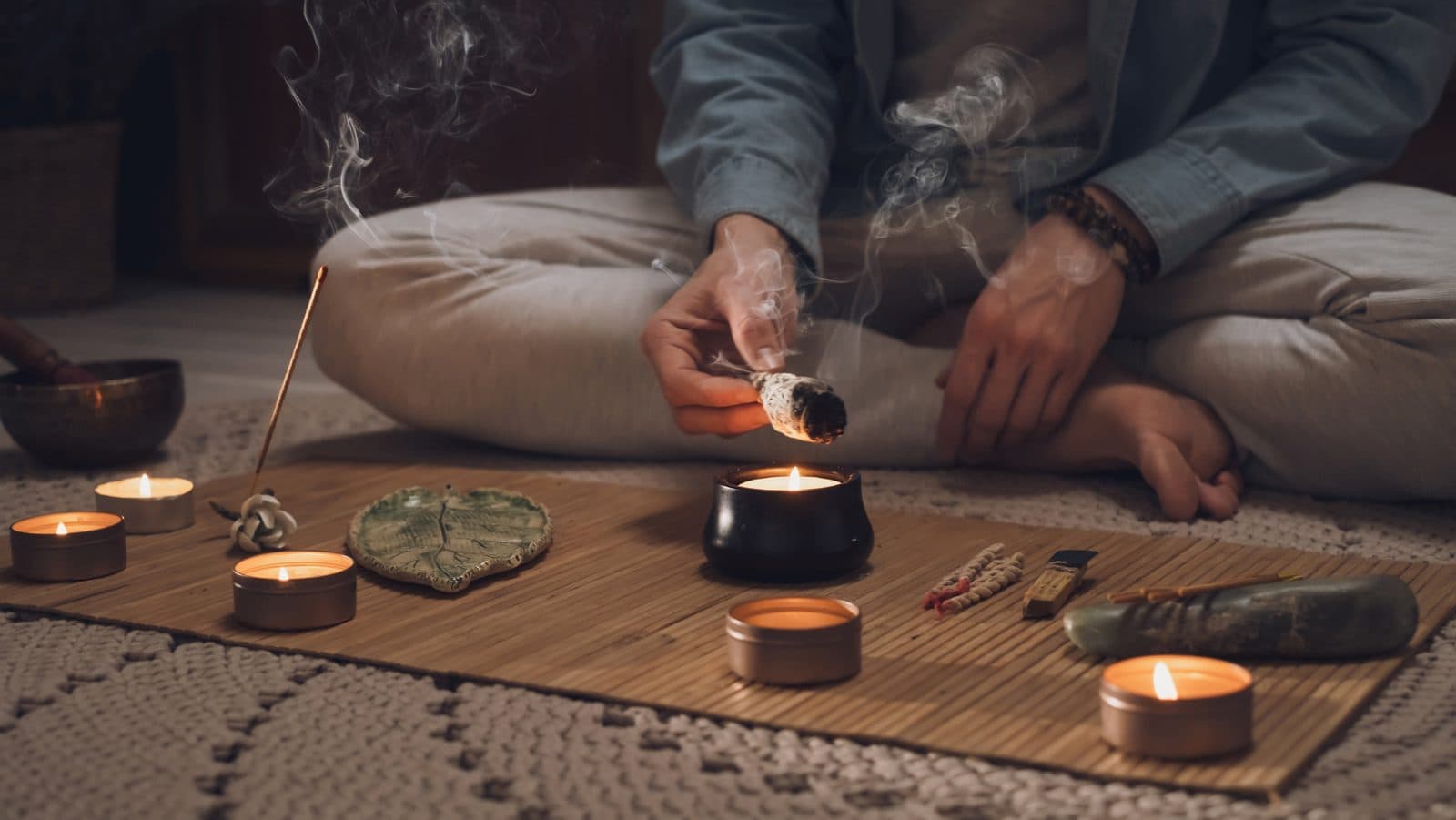
What Is a Sacred Space?
When we hear the word “altar,” our minds might go straight to churches, incense, or religious statues. But sacred space is much broader than that. A sacred space can be a small corner of your home, a drawer, or even a cushion where you sit and breathe. It is not defined by grandeur, but by intention.
As Susan Cain wisely puts it: “Magic lies in the infusion of meaning — and we all have the power to infuse meaning.”
Sacred spaces are not reserved for religious people or spiritual elites. They are available to anyone who wants to create a pause, a sense of anchoring, or a moment of presence in the day. Likewise, rituals do not need to be elaborate or mystical. They can be ordinary actions performed with awareness: making tea, lighting a candle, writing a note of gratitude. It’s not what you do, but how you do it that makes it sacred.
Why Rituals and Sacred Spaces Matter
Creating and honoring rituals can help us:
- Reduce anxiety and create small oases of calm
- Feel grounded in who we are and what we value
- Make sense of our experiences, especially in chaotic times
- Reconnect with something greater — nature, spirit, lineage, or purpose
This isn’t just for the mystically inclined. Even the most rational people create rituals: athletes before competitions, surgeons after long shifts, writers before sitting down to work. Rituals offer containment. They center us. In a fast-paced world that often neglects the soul, rituals become an act of reclaiming presence — a way to say, “This moment matters.”
How to Create Your Own Sacred Space
There are no rigid rules — only what resonates with you. Here’s a simple guide to help you start:
- Choose a small spot that you can dedicate to yourself — a shelf, a tray, even a corner of your desk.
- Add 1–2 meaningful objects: a candle, a flower, a photo, a stone — anything that feels “right.”
- Create a ritual to enter this space: lighting the candle, closing your eyes and breathing, saying a sentence like, “This space is sacred because I choose it.”
Keep it clean, alive, and evolving. Your sacred space is a reflection of your current inner state — let it grow with you. There’s no need for expensive tools or spiritual credentials. Your intuition is your best guide.
What If I’m Not Religious?
That’s perfectly fine — and increasingly common. Many people today are stepping away from organized religion but still long for moments that feel meaningful, intentional, and ceremonial.
Rituals can be entirely secular:
- Taking a deep breath before starting your workday
- Showering with mindfulness and gratitude
- Journaling before bed or whispering kind words to yourself
Others create their own transition rituals — to begin a new season, to grieve a loss, or to invite change. Even dancing alone with your eyes closed can be a powerful ritual.
As someone once said: “You are the most sacred object in the room.” If you choose to honor something as sacred, it becomes sacred.
🌿 Practice: Create Your Sacred Corner
Today, choose a small area of your home or room and dedicate it as your sacred space. Place one or two meaningful items there, such as a stone, flower, photo, or candle. Add a note with a guiding word or phrase. Sit, breathe, and say to yourself: “This space is sacred because I choose it.” Let this space be a soft anchor to return to when the world feels noisy.